Paro Tshechu
About this festival
The Paro Tshechu stands as one of the most prominent, vibrant, and highly attended religious festivals in the Kingdom of Bhutan. Unfolding annually in the spring, it is a magnificent celebration of Tibetan Buddhism and Bhutanese cultural heritage that draws thousands of local devotees and travelers from across the globe. As a traditional tshechu—a religious festival honoring Guru Rinpoche (Padmasambhava), the revered 8th-century master who introduced Vajrayana Buddhism to the Himalayas—the event is characterized by mesmerizing mask dances, sacred rituals, and vibrant communal gatherings. For international visitors, it offers a profound, visually stunning introduction to Bhutanese spiritual life and communal identity within a living ancient culture.
History & background
The history of the Paro Tshechu is inextricably linked to the architectural and spiritual epicenter of the region, the Rinpung Dzong (“Fortress on a Heap of Jewels”). The broader tradition of tshechus in Bhutan was largely established and formalized in the 17th century by Zhabdrung Ngawang Namgyel, the unifier of the Bhutanese state, and his monastic successors. These festivals were strategically designed to honor Guru Rinpoche, impart Buddhist dharma (teachings) to the lay public through visual storytelling, and forge a unified national identity. Over the centuries, the Paro Tshechu has evolved into a major regional cornerstone. The sacred dances performed during the festival have been passed down through generations of monks and trained laymen, carefully preserving the exact choreography, spiritual intent, and musical accompaniment established by early Buddhist visionaries.
Cultural, religious, and historical significance
Within the Bhutanese cultural paradigm, a tshechu transcends the concept of a mere social gathering or theatrical performance; it constitutes a vital spiritual practice. It is a deeply held belief that observing the sacred mask dances (cham) washes away accumulated negative karma, generates spiritual merit, and imparts blessings that guide the soul. The dances serve as dynamic, visual manifestations of Buddhist philosophy, depicting intricate tales of moral virtue, the subjugation of malevolent spirits, and the compassionate nature of enlightened beings. Furthermore, the festival plays an indispensable role in maintaining community cohesion. For the local Bhutanese, it provides a crucial occasion to socialize, reaffirm familial bonds, and celebrate their heritage by proudly wearing their finest hand-woven ghos (for men) and kiras (for women), transforming the festival grounds into a tapestry of traditional textile art.
What happens during the festival
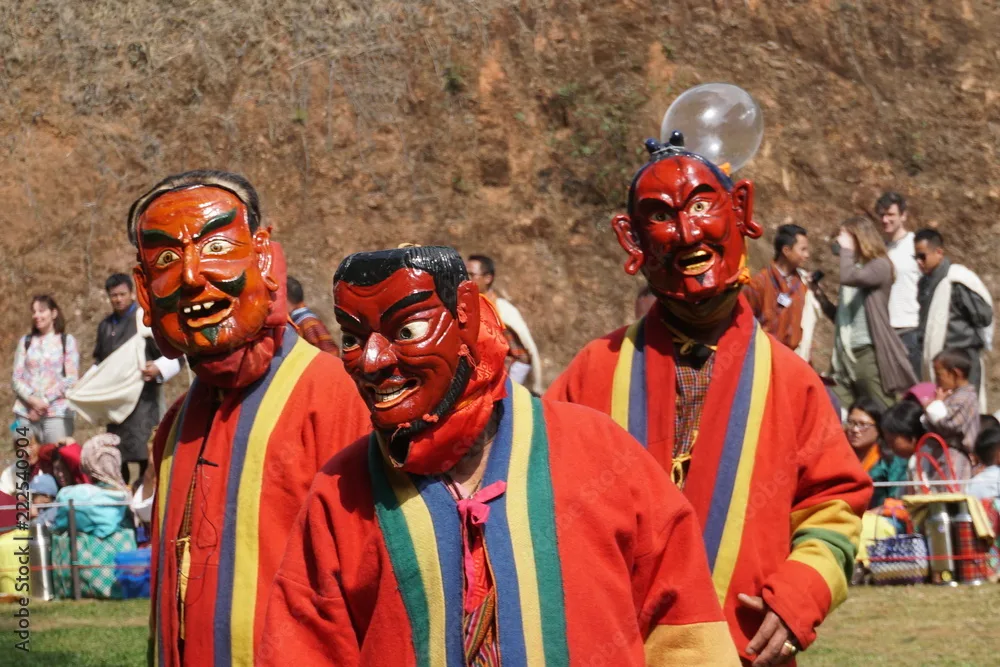
Over the course of five days, the Deyangkha festival ground comes alive with a meticulously scheduled sequence of religious rituals and choreographed movements. Monks from the central monastic body and specially trained laymen, adorned in spectacular costumes of bright silk and wearing intricately carved, heavy wooden masks, perform various cham dances. These performances include vivid depictions of wrathful deities protecting the dharma, legendary heroes, and animal manifestations demonstrating spiritual truths.
Interspersed among the solemn religious dances are performances by Atsaras—masked clowns wielding wooden phalluses. The Atsaras hold a unique and highly respected religious status; they mock the seriousness of the event, interact playfully with the crowd, and distract negative spirits, all while imparting hidden spiritual truths and representing highly realized masters who have transcended worldly dualities. Local women also perform traditional vocal and folk dances between mask dances, providing a melodious contrast to the intense monastic rituals.
Key highlights
Unfurling of the Giant Thongdrel
The absolute pinnacle of the Paro Tshechu occurs on the final morning, commencing well before dawn. In a deeply emotional ceremony, a colossal, intricately embroidered silk tapestry known as a Thongdrel (or Thongdrol) is unfurled down the face of Rinpung Dzong. This applique depicts Guru Rinpoche surrounded by his divine manifestations. In Bhutanese spiritual tradition, Thongdrel translates to “liberation on sight,” reflecting the belief that viewing this sacred relic cleanses negative karma. It is displayed for only a few hours and rolled up before the first sunlight touches it.
Sacred Mask Dances (Cham)
Dramatic performances including the Dance of the Three Types of Ging and the Dance of the Eight Manifestations of Guru Rinpoche.
Atsara Performances
Sacred clowning that provides humor while teaching spiritual lessons.
Visitor information
- Crowd Levels
- Due to its proximity to Bhutan's international airport and immense popularity, Paro Tshechu is one of the most heavily attended festivals in the country. Expect large crowds.
- Dress Code
- Strict cultural etiquette applies. Visitors must dress modestly in formal attire—long sleeves, collared shirts, and full-length trousers or skirts are required.
- Etiquette
- Hats, caps, and umbrellas are strictly prohibited inside the dzong courtyard and festival grounds during rituals as a sign of respect.
- Photography
- Photography is generally permitted in the open courtyard, but flash photography directed at dancemakers/monks and photographing inside internal shrines is strictly prohibited.
- Participation
- Visitors are welcome observers and should follow guide instructions regarding designated seating areas.
What makes this festival special
The Paro Tshechu offers an unparalleled combination of accessibility, grand scale, and profound spiritual depth. Set against the stunning architectural grandeur of Rinpung Dzong and the blooming spring landscape of the Paro valley, the festival provides a sensory feast of color, sound, and devotion. The pre-dawn unveiling of the giant Thongdrel remains a deeply moving spectacle that transcends cultural barriers, standing as one of the most iconic experiences in the Himalayas.